

Statutory Guidance Section
Benedict’s Law September 2026
Benedict's Law is the legislation that has led to the introduction of statutory guidance on allergy safety in schools from September 2026. It was developed following the death of Benedict Blythe, a five-year-old boy who suffered a fatal allergic reaction at school in 2021.
The legislation aims to improve the safety, inclusion and wellbeing of children with allergies by strengthening how schools manage and respond to allergic reactions.
From September 2026, schools in England are required to implement measures including:
- A dedicated Allergy Safety Policy.
- Allergy awareness and emergency response training for staff.
- Individual Healthcare Plans (IHPs) for pupils with significant allergies.
- Access to emergency adrenaline auto-injectors (AAIs), such as EpiPens.
- Effective recording, review and learning from allergy-related incidents.
The most significant change introduced by Benedict's Law is the move from managing allergies solely within general medical conditions arrangements to a dedicated allergy safety framework. This includes a published Allergy Safety Policy, regular staff training, robust emergency planning, individual healthcare plans and a focus on continuous learning from incidents.
For more information, visit the Benedict Blythe Foundation website.
The Benedict Blythe Foundation Allergy & Education Foundation
Allergy Safety in Schools: Statutory Guidance (DfE, July 2026)
The Department for Education's Allergy Safety in Schools statutory guidance came into effect in September 2026 as part of the changes introduced through Benedict's Law and the Children's Wellbeing and Schools Act 2026.
The guidance requires maintained schools, academies and pupil referral units (PRUs) in England to have effective arrangements in place to support pupils with allergies and minimise the risk of serious allergic reactions.
Its aim is to improve the safety, inclusion and wellbeing of children and young people with allergies by promoting a consistent and proactive approach to allergy management across all school settings.
Key requirements include:
- Having a dedicated and published Allergy Safety Policy.
- Regularly reviewing allergy management arrangements and procedures.
- Developing Individual Healthcare Plans (IHPs) for pupils with significant allergies.
- Providing staff training on allergy awareness and emergency response.
- Ensuring access to emergency medication and clear emergency procedures.
- Recording, reviewing and learning from allergy-related incidents.
- Supporting pupils with allergies to participate fully and safely in all aspects of school life.
The guidance reinforces schools' responsibilities to safeguard pupils, support those with medical conditions, and create an inclusive environment in which children with allergies can learn and thrive safely.
Duty of Care
Schools have a duty to take reasonable steps to protect pupils from harm. This includes identifying and managing allergy risks, supporting pupils with medical needs, and ensuring appropriate emergency procedures are in place to keep children safe.
Legislative and Guidance Implications
Working Together to Safeguard Children (2026)
The Working Together to Safeguard Children statutory guidance reinforces the responsibility of all agencies to work collaboratively to safeguard and promote the welfare of children.
Key themes include:
- A child-centred approach.
- Stronger multi-agency partnership arrangements.
- Effective information sharing.
- Early intervention and support.
- Improved accountability across safeguarding partners.
The guidance places greater emphasis on supporting disabled children, young carers, and children experiencing harm outside the home, while ensuring that children's voices remain central to assessments and decision-making.
Children's Wellbeing and Schools Act 2026
The Act introduces measures relating to safeguarding, attendance, support for children in care, family decision-making, school standards, allergy safety, and educational inclusion.
Equality Act 2010
Neither Benedict's Law nor the Children's Wellbeing and Schools Act 2026 directly amends the Equality Act 2010. However, both strengthen expectations on schools and public bodies to fulfil their existing duties, particularly in relation to disability discrimination, reasonable adjustments, inclusion, and equality of opportunity.
Together, these legislative developments strengthen the practical application of the Equality Act by promoting inclusion, reducing barriers for children with health conditions and vulnerabilities, and increasing accountability for ensuring equitable access to education and support services.
Allery Safety in Schools - pdf
Allergy safety policy
Allergy Safety Policy: Key Information for Schools
The Allergy Safety Policy helps schools create a safe, inclusive environment for children and young people with allergies. Schools should have a dedicated policy that is reviewed annually, led by a named senior member of staff, and made available to parents, carers, and staff.
What Should an Allergy Safety Policy Cover
Staff Training All staff should receive regular allergy awareness and emergency response training. This includes recognising allergic reactions and anaphylaxis, understanding allergy action plans, knowing how to access emergency medication, and responding confidently in an emergency.
Reducing Risk Schools should take practical steps to reduce exposure to known allergens. This includes managing risks in dining areas, classroom activities, cooking, crafts, science lessons, animal visits, and school trips. Risk assessments should consider the individual needs of pupils with allergies.
Supporting Pupils with Allergies Schools should identify pupils with allergies, maintain accurate records, and work with parents and healthcare professionals to ensure appropriate support is in place. Children whose allergies require additional arrangements should have an Individual Healthcare Plan (IHP), supported by Allergy Action Plans and Asthma Action Plans where required.
Access to Adrenaline Pupils prescribed adrenaline auto-injectors should always have rapid access to their medication. Schools should also hold clearly labelled spare adrenaline devices, stored in accessible locations and available within five minutes of wherever an emergency may occur.
Trips, Visits and Emergency Preparedness All children should be able to participate safely in school activities, trips, and visits. Appropriate risk assessments, access to medication, and trained staff are essential components of effective allergy management.
Wellbeing and Inclusion The policy should promote the wellbeing of children and young people with allergies, recognising that living with allergy can cause anxiety. Schools should also take proactive steps to prevent bullying related to allergies and ensure pupils feel included in all aspects of school life.
Learning from Incidents Schools should have clear procedures for recording, reporting, and reviewing allergy incidents and near misses. Learning from these events helps strengthen policies and improve safety for everyone.
Key Message: An effective allergy safety policy combines prevention, preparedness, staff training, and inclusion to ensure children and young people with allergies can fully participate in school life safely and confidently.
Please use the link below to download the Allergy Safety Policy information from GOV.UK
Allery Safety Policy Template - pdf
What is an Adrenaline Auto-Injector
An adrenaline auto-injector (AAI) is a medical device used to deliver a life-saving dose of adrenaline (epinephrine) during a severe allergic reaction (anaphylaxis). It is designed to be used quickly and easily in an emergency, helping to reduce symptoms such as airway swelling, breathing difficulties, and low blood pressure while waiting for emergency medical help to arrive.
Common brands include EpiPen, Jext, and Emerade. Pupils at risk of anaphylaxis may carry their own prescribed auto-injector, and schools may also hold spare devices for emergency use.
Spare Adrenaline Devices
Having a spare adrenaline auto-injector available in school can provide an additional layer of safety for pupils at risk of anaphylaxis. Schools should ensure staff understand the purpose of spare devices and how they support emergency response when a prescribed device is unavailable, inaccessible, or has been used.
Why Are Spare Adrenaline Devices Recommended
Spare adrenaline auto-injectors are recommended to help schools respond quickly and effectively to an anaphylactic emergency. In some situations, a pupil's prescribed device may not be immediately available, may have expired, may malfunction, or a second dose of adrenaline may be required before emergency services arrive.
Having a spare device available can:
- Provide immediate access to life-saving treatment during an anaphylactic reaction.
- Support pupils whose own prescribed device is unavailable or cannot be located quickly.
- Enable administration of a second dose if symptoms do not improve or return after the first dose.
- Reduce delays in treatment, which is critical as anaphylaxis can progress rapidly.
- Give staff greater confidence when responding to a severe allergic reaction.
- Help schools meet best practice recommendations for the management of allergies and anaphylaxis.
Spare adrenaline devices should complement, not replace, a pupil's own prescribed medication and should be stored where they can be accessed quickly in an emergency.
Other Key considerations include:
- Storing devices safely and in line with manufacturer guidance
- Keeping devices in clearly identified, easily accessible locations
- Ensuring devices can be reached and administered within 5 minutes of an emergency
- Regularly checking expiry dates and replacing devices when required
- Maintaining accurate records of storage, checks, use, and replacement
Effective management of spare adrenaline devices helps schools respond quickly and confidently to anaphylactic emergencies, supporting the safety and wellbeing of children and young people.
Asthma and Allergy
Asthma and allergy are closely linked, and many children with food allergies also have asthma. The Allergy Safety in Schools statutory guidance highlights that asthma is frequently associated with allergy and anaphylaxis, as exposure to allergens can trigger asthma symptoms or attacks.
Children with both asthma and food allergies may be at increased risk of severe allergic reactions and therefore require careful support and monitoring within the school environment.
One of the key challenges is that wheezing and breathing difficulties can occur during both asthma attacks and anaphylaxis, making it difficult to distinguish between the two in an emergency. Staff should be aware that sudden breathing difficulties in a child with a known food allergy should always raise concern about possible anaphylaxis.
The guidance is clear that if anaphylaxis is suspected, adrenaline must be administered immediately. A reliever inhaler may be used afterwards, if recommended within the child's Allergy Action Plan and wheezing continues, but it should never be used as a substitute for adrenaline when treating anaphylaxis.
Key message for schools: Children with both asthma and allergies require particular attention. Effective asthma management, awareness of allergy risks, and prompt recognition and treatment of anaphylaxis can be lifesaving. Schools should ensure that Allergy Individual Healthcare Plans (IHPs) and Asthma Action Plans are in place, accessible, and understood by relevant staff.
Allergy vs Food Intolerance: Understanding the Difference
The statutory guidance highlights that food allergy and food intolerance are different conditions and should not be confused. While both may require dietary management in school, only a food allergy can cause a serious allergic reaction, including anaphylaxis.
A food allergy occurs when the body's immune system reacts to a food. Symptoms can range from mild reactions to severe symptoms affecting the airway, breathing, or circulation. In some cases, this can lead to anaphylaxis, which is a medical emergency.
A food intolerance is a non-immune reaction in which the body has difficulty processing or digesting certain foods. Symptoms may include abdominal pain, bloating, diarrhoea, or other digestive discomfort and may continue for hours or days after consuming the trigger food. Unlike a food allergy, a food intolerance cannot cause anaphylaxis.
The Allergy Safety in Schools statutory guidance also recognises the need for schools to support children and young people with food intolerances through appropriate dietary arrangements. However, food intolerances do not fall within the scope of a school's Allergy Safety Policy and are usually managed through wider medical needs and health support arrangements.
Key message for schools: While both allergies and intolerances require schools to take children's health needs seriously, only allergies carry the risk of anaphylaxis. Understanding the difference helps ensure that appropriate support, risk management measures, and emergency response procedures are in place for every child.
Reducing Allergy Risks in the School Environment
Creating an allergy-aware environment is a key part of keeping children and young people safe in school. Effective risk reduction focuses on identifying potential allergen exposures, implementing sensible precautions, and ensuring that all pupils can participate fully in school life. Schools should consider allergy risks across all areas of the school day, including classrooms, dining areas, extracurricular activities, trips, and visits.
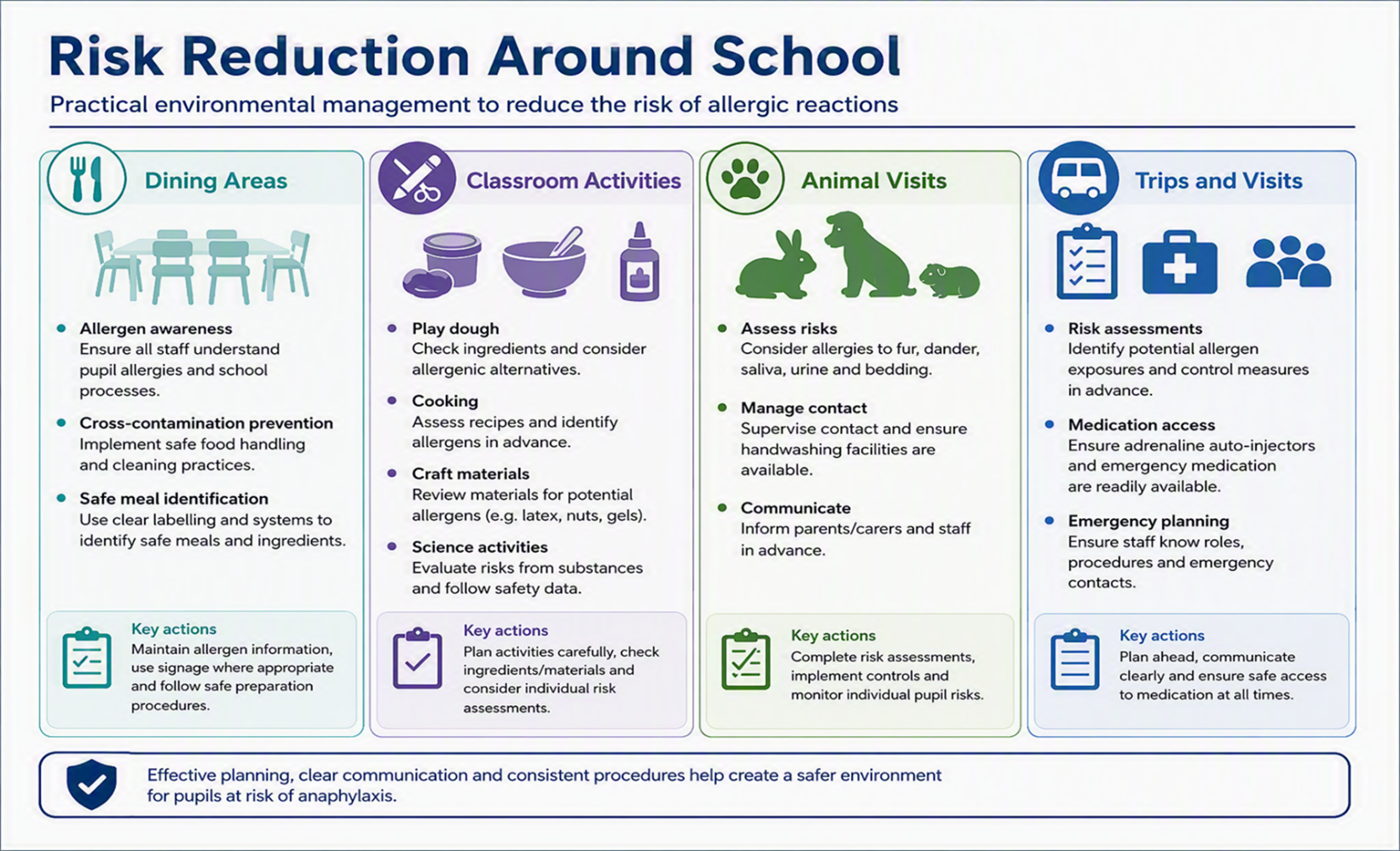
Food and Dining Areas
Schools should have clear systems in place to manage food allergies, including allergen awareness, safe meal identification, and measures to prevent cross-contamination. Staff involved in food preparation and service should understand allergen risks and ensure that accurate allergen information is available to pupils and families.
Classroom Activities
Many everyday learning activities can contain hidden allergens. Schools should consider allergy risks when planning activities involving play dough, cooking ingredients, craft materials, science experiments, and recycled food packaging. Where necessary, safe alternatives should be used to ensure all pupils can participate.
Animal and Environmental Allergens
Some children may have allergies to animal fur, dander, saliva, pollen, mould, dust mites, or other environmental triggers. Schools should take reasonable steps to minimise exposure and consider these risks when arranging animal visits or activities involving outdoor environments.
Trips and Educational Visits
Children with allergies should be able to take part in trips and visits alongside their peers. Risk assessments should identify potential allergen exposures, ensure staff understand emergency procedures, and confirm that prescribed medication and emergency treatment are readily accessible throughout the visit.
Planning Ahead
All staff should consider allergy risks when planning activities, events, celebrations, curriculum activities, and educational visits. Taking simple preventative measures, alongside maintaining access to emergency medication and clear allergy information, helps create a safer and more inclusive learning environment for everyone.
Key Message: An allergy-aware school environment is built on good planning, effective communication, sensible risk management, and inclusion, enabling all children and young people to learn, participate, and thrive safely.
Starting Well Service Allery Safe Awareness Training
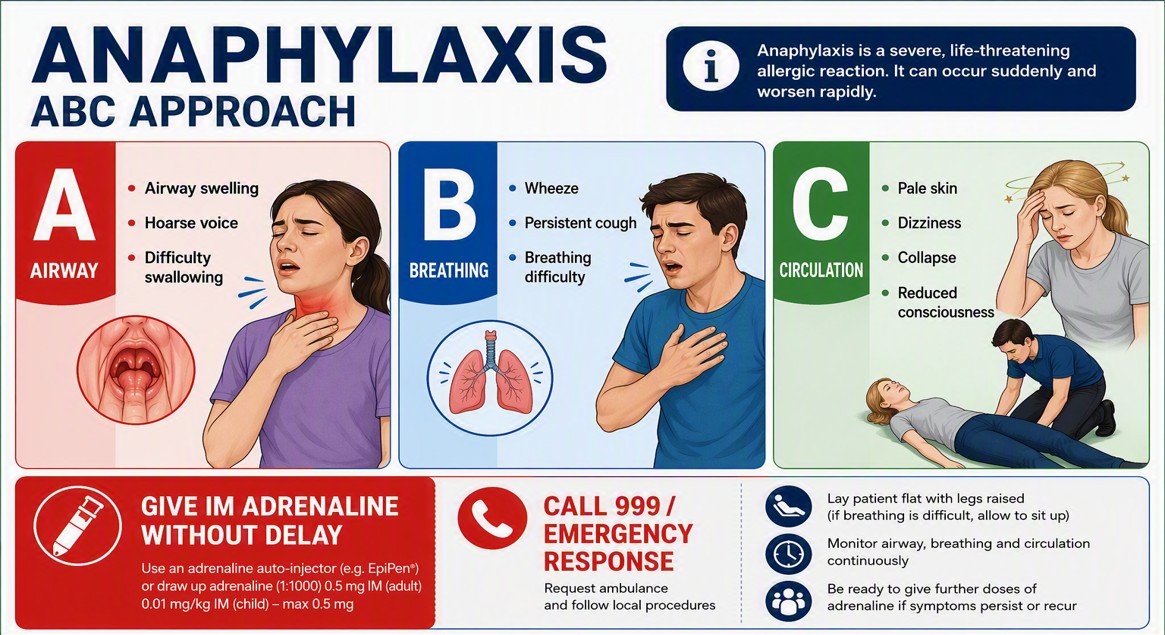
Emergency Response Guide:
- It is recommended that schools have a clear plan in place to ensure all staff understand the procedures and expectations during a medical emergency.
- The resources linked below provide helpful guidance to support schools in understanding their responsibilities and in developing an effective response plan for managing allergic reactions and anaphylaxis in an emergency.
www.allergyuk.org/support-for-you/helpline
Following an Incident:
- Record the incident and all actions taken in the child's school records.
- Inform parents/carers of the incident as soon as possible.
- Replace any used or expired Adrenaline Auto-Injectors (AAIs) without delay.
- Review the circumstances surrounding the incident, including any near misses.
- Identify learning and reduce the risk of recurrence.
- Update the Individual Healthcare Plan (IHP) and risk assessment if required.
- Ensure all relevant staff are informed of any changes to the child's allergy management plan.
- Consider whether additional staff training or awareness is needed following the incident
School Allergy Safety Compliance Checklist 2026 Sample
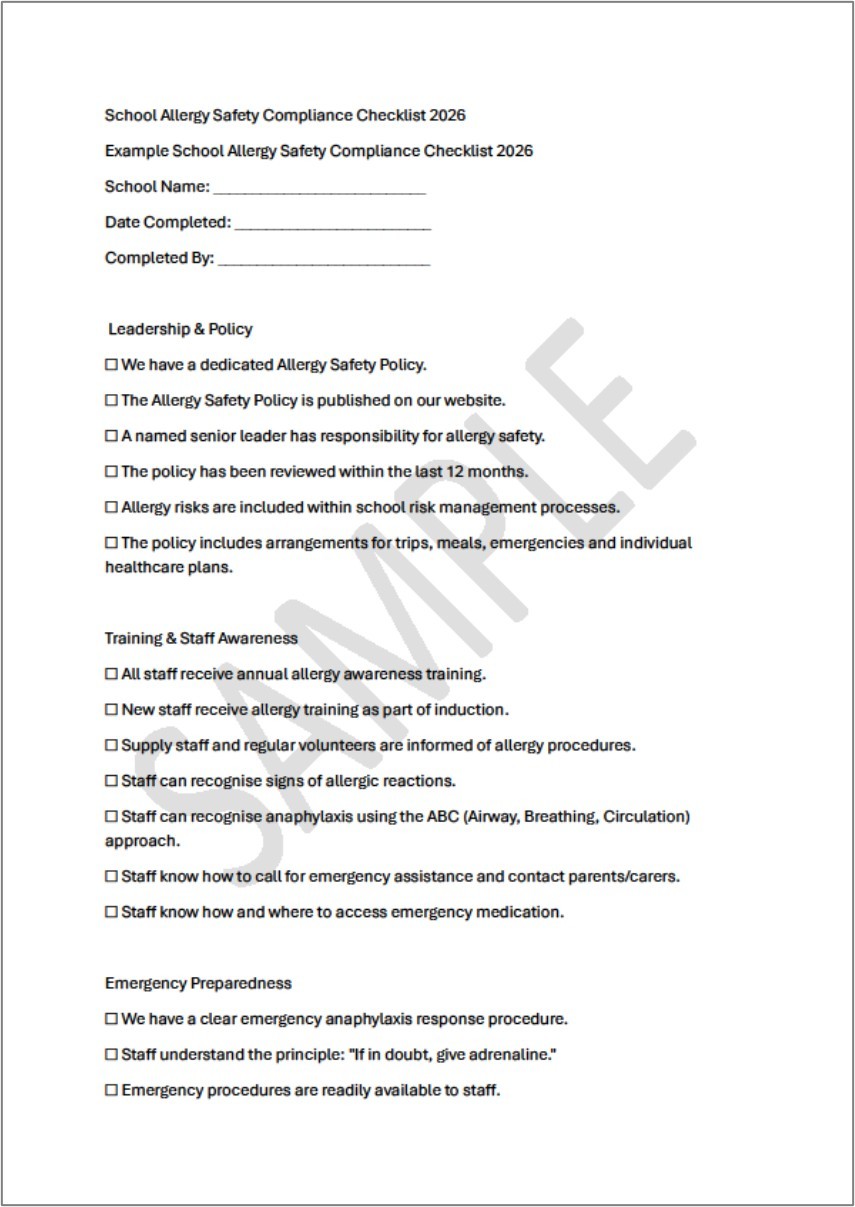
School Allergy Safety Compliance Checklist 2026 Sample - pdf
Individual Healthcare Plan - (IHP)
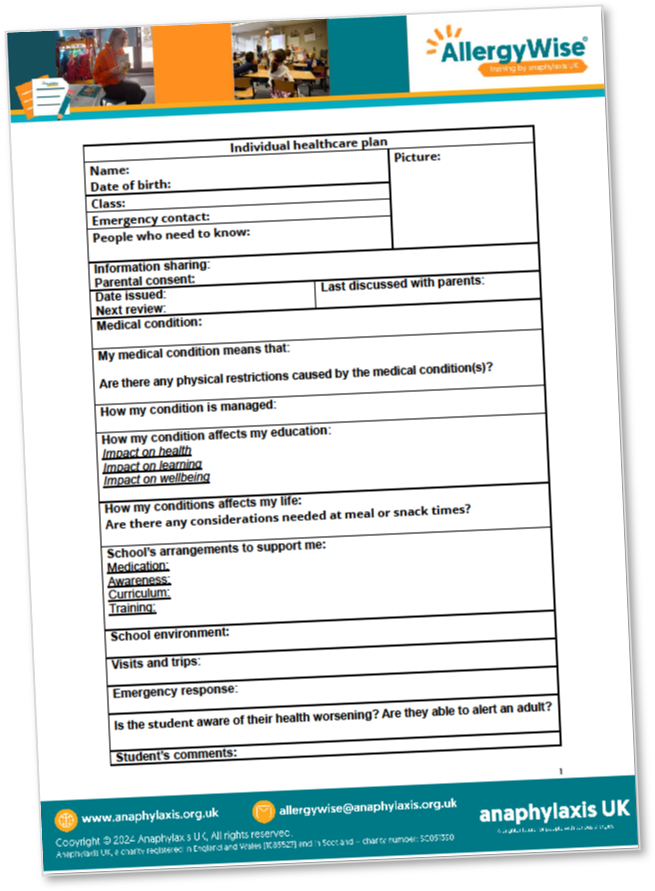 The Role of Individual Healthcare Plans (IHPs)
Individual Healthcare Plans (IHPs) are the key document used by schools to set out how they will support a specific child or young person with an allergy while they are in education. They are designed to ensure the child is safe, included and able to participate fully in school life.
An IHP is not a clinical document and does not replace medical advice. Instead, it records the practical arrangements the school will put in place based on information from:
- The child or young person
- Parents/carers
- Healthcare professionals
- Allergy Action Plans or Asthma Action Plans
- Prescribed medication requirements
A child or young person should have an IHP if:
- Their allergy has a functional impact in school.
- They are at risk of harm because of their allergy.
- They require support or adjustments beyond those routinely available to all pupils.
Examples include pupils with:
- Food allergies.
- Risk of anaphylaxis.
- Severe eczema requiring adjustments.
- Allergies that require medication or specialist arrangements in school
The guidance states that an IHP should include:
- The child's details and emergency contacts.
- Known allergies and allergens.
- Information on prescribed medication.
- Any Allergy Action Plan or Asthma Action Plan.
- How allergy risks will be managed in school.
- Emergency response procedures.
- Arrangements for meals, activities, school trips and visits.
- Impact on learning, attendance and wellbeing.
- Review dates and responsibilities.
IHPs serve several important functions:
1. Keeping children safe
They ensure staff know:
- What allergens to avoid.
- What symptoms to look for.
- What action to take in an emergency.
- Where medication is stored and how to access it quickly.
2. Supporting inclusion
They help ensure children with allergies can:
• Attend school regularly.
• Access school meals safely.
• Participate in trips, visits and extracurricular activities.
• Take part alongside their peers without unnecessary restrictions.
3. Providing clarity for staff and families
The IHP gives everyone a shared understanding of:
- What support is required.
- Who is responsible for providing it.
- How concerns or emergencies will be managed.
4. Supporting emergency response
The IHP links directly to any Allergy Action Plan and provides staff with clear guidance about recognising and responding to allergic reactions and anaphylaxis.
Review and Updating
IHPs should be reviewed:
- At least annually.
- Whenever there is a change in the child's condition, medication or medical advice.
- After any serious allergy incident or near miss
In Summary
An Individual Healthcare Plan is the school's personalised plan for managing a pupil's allergy. It translates medical advice into practical arrangements, helping to keep the child safe, support their wellbeing and ensure they can fully participate in education and school life.
Under the new statutory guidance, school nursing teams are not given responsibility for writing or owning Individual Healthcare Plans (IHPs), It is the responsibility of the school to write the IHP but the Starting Well 0-19 Service is available to support where required.
To download a copy of the Allery Wise Individual Healthcare Plan template and to view an example IHP please use the link below.